
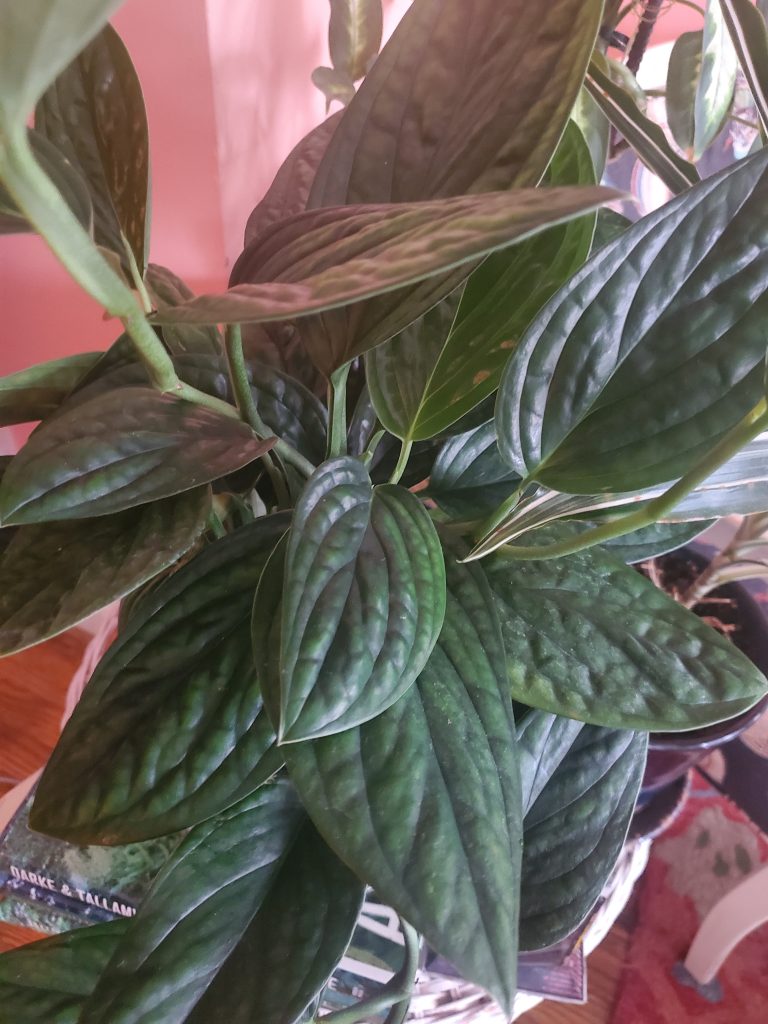
I added a new houseplant to my collection. It was the thick puckered dark green leaves that drew me in and convinced me to bring it home.
Oh, I wasn’t looking to buy plants that mid-December day, but this one is a beauty.
Monstera Peru, a tropical plant also known as Monstera Karsteianum or Green Galaxy Monstera, is unlike other varieties of monstera, which conjures up images of heart-shaped split leaves. The Peru leaves do not split and are much darker green.
I have two monstera deliciosa plants, or the swiss cheese plan. They are beautiful, but very different from this new variety. One I keep at home and on my office window ledge. It has been fun to watch new leaves appear and develop the famous splits.
Monstera peru is a much slower grower and should not need repotted for a few years.
Like other houseplants, the peru thrives in indirect sunlight and a bit of humidity, the same environment enjoyed by pothos and philodendrons. Clustering plants together or adding a humidifier can help. Another option is to place the container on a wide tray of pebbles with water.
I’m a big fan of the old-fashioned spray bottle and giving my plants a daily (sometimes weekly) spritz. I have a rhythm; the kitchen plants get attention while the pup eats her dinner. The others downstairs may not get daily attention, but I aim for early morning. Others around the house get once a week attention – watering, deadheading, and spritzing.
Be careful not to overwater. Too much water is a common issue for houseplants. Most like the soil to dry – at least the top 2 inches of the soil – before adding more water. Watch for yellowing leaves or leaves dropping prematurely as signs of a plant suffering from too much water.
The monstera peru is a climber if given something to climb. Consider a moss stick or other poles to encourage upward growth. A moss stick is just what it sounds like – a column covered in sphagnum moss. You can buy or make them -they are an easy DIY project.
If height is not what you’re going for with the plant, it will grow level along a desk or tabletop and looks lovely vining over a hanging basket. The peru is an epiphyte, meaning it often grows on other plants and absorbs moisture and nutrients from the air. Other epiphytes examples are stag ferns and orchids.
Adding a small amount of orchid potting mix to the soil will keep the soil well-draining and light. This allows water and air to move quickly through the soil, keeping the roots healthy.
Pruning can help create a fuller plant. Pinching new growth right above the node will force the plant to branch out and not keep growing on one main vine.
If propagating, ensure a few nodes are on the cutting, then keep the new stem in water until roots appear.
My new monstera peru has joined the family and seems to be thriving. I do have it clustered with other plants, some tropical, all in what I refer to as the “magic corner” where light and flow seem just right.
Houseplants are a way to bring the garden indoors. This is good for those unable to be outside gardening and good for those of us missing getting our hands dirty with outside soil.
Some folks are collectors of one variety. They may have a hundred orchids or a table full of African violets. Me, I like to mix it up by adding interesting leaf color, texture, height, and size. Including these features in our assortment keeps it exciting and fun.