
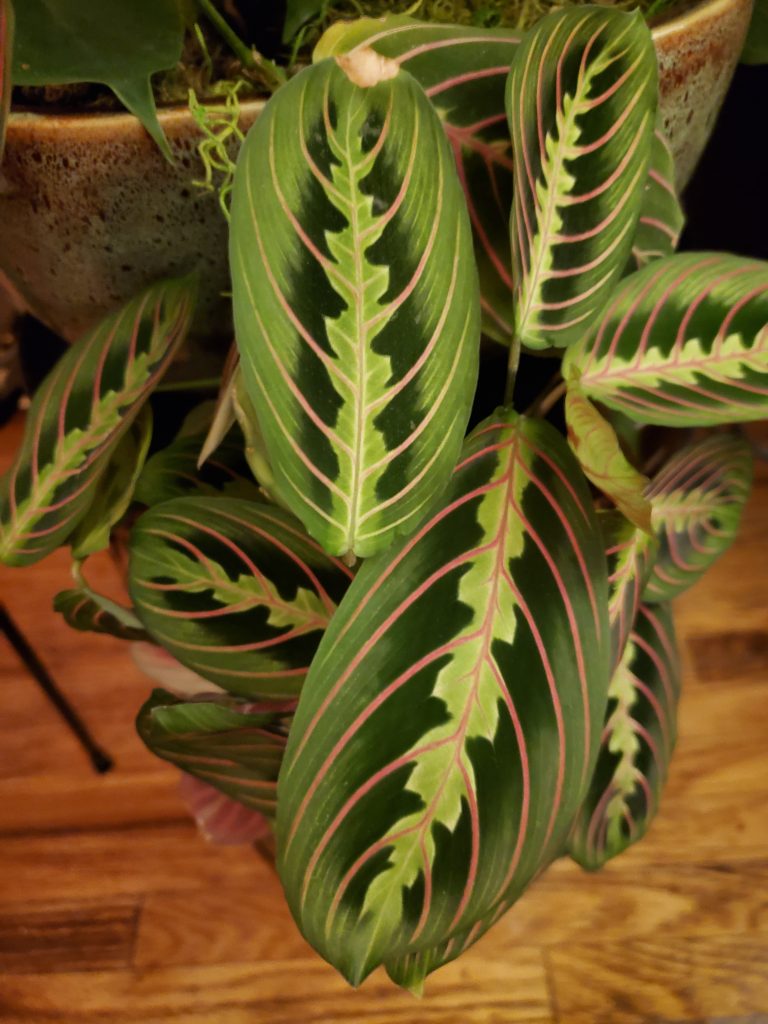
Many of us shared feasts of turkey and mashed potatoes this week, and if you’re like me, you are still nibbling on the leftovers of a delicious meal. Many of us also gave thanks, gratitude, or prayers for family, food, and the fellowship of the meal.
At the little house on a big hill, tucked among other plants in a room far from the dining table, is a plant that gives thanks every night.
A prayer plant.
As a member of the Marantaceae family, this group of plants “pray” every night.
When nighttime or darkness approaches, these plants close their leaves and “pray” as they go to sleep and open them with the light of a new day. This daily opening and closing is called nyctinasty and is part of the plant’s circadian rhythm.
Pretty cool, huh? Nature is amazing.
This tropical plant is native to Brazil, loves a warm, humid environment, and is a common houseplant. The most familiar variety is the tri-colored plant, easily recognizable with dark green leaves and red veining.
Other varieties are the Rabbit’s Tracks with plain green leaves and two rows of darker spots of color and the Black Maranta with silver veining and a very dark leaf background.
Prayer plants thrive in dappled sunlight and a bit of humidity. If placed in direct sunlight, the leaves will burn and turn brown. Give this plant, or any plant, a little extra humidity by spritzing with water regularly, or try sitting the container on a tray filled with pebbles, then add water to the tray.
As with all house plants, watering is an art form.
Too little, and the plant shrivels and drops leaves. Too much, and the plant turns yellow and drops leaves. Balance and routine are the secrets. The prayer plant likes moist soil but let it dry out between waterings. I suggest once a week to every ten days for your watering schedule.
This low-growing plant is often about six inches tall but will spread up to 12 inches wide. When grown in USDA Zones 11-12, it can grow taller and even produce a white bloom in the spring.
As houseplants, this is not a plant that will live for generations. Expect your plant to grow for 5 – 10 years with regular fertilizing using a water-based solution diluted 50%.
The prayer plant is slow-growing and does not need repotted often. To propagate, separate the roots, then keep the new plants warm and well-watered until new growth appears.
This is a plant with pretty leaves, and that is a reason to add it to your indoor collection. It is also a plant with a nice message to send to someone as a reminder you are thinking of them daily. Regardless of the reason or the season, it makes a lovely gift.
After the turkey and bargain shopping, as you settle in to read the weekend paper, know that I am thankful for readers, those who love to garden, those who get their hands in the soil, and those who may not have a garden but enjoy this gardener’s stories.