
Secret garden? You bet I will move mountains to get a peak!
Turns out it wasn’t that difficult. A few quick “Hellos” and “Pleases,” and I was in.
Ward Hollow Wildlife Habitat is 150 acres of trails and fields filled with nature’s creatures living their best life. This might be one of South Charleston’s best-kept secrets.
It was a sunny late summer day when we met to learn about the area. Led by the passionate and amazing Karen Kish and Bethany Kinder, we learned that Ward Hollow is owned and maintained by Dow. They work with Jacobs to help facilitate the projects and activities. The transition from fields of clay soil used for Dow employee recreation to the current habitat didn’t happen overnight.
Groups, including government agencies, community advisory panels, schools, local experts, a wildlife habitat council, and volunteers, worked together. They still are! New projects and trail maintenance happen year-round.
The objectives of the habitat were to protect and enhance biodiversity, engage with the community, and promote environmental education.
Mission Accomplished.
Eight projects have earned the Conservation Certification from the Wildlife Habitat Council. They are amphibian restoration, native fruit trees, stem education, Ward A Pond Waterfowl, reptile basking, pollinator habitat, bluebird nest boxes, and invasive species.
For this tour, we drove through the area. The roads were cleared and paved; after all, these same roads are used to bring school field trips into a shelter used for outdoor classrooms. This same shelter serves as a meeting space for volunteers and workshops, including WV Master Naturalist classes, university field research, and community service projects.
One of my favorite projects was near the shelter, a worm composting toilet. I was fascinated. Rainwater is collected and used to wash your hands with biodegradable soap; the greywater is collected and used to flush for the next person. Red wiggler worms help speed up the composting. It sounds silly to talk about an outhouse, but I told everyone about it for the following week.
This was only one stop on the tour. We hopped out of the truck to get a view of the pond. It is not just any pond but a 30-acre pond that is a surprise to find on a hilltop in Kanawha County. Here, bird watchers gather with binoculars, cameras, and notebooks to track sights and flights of the day. Twenty-three species are regulars, and over ninety have been cataloged – a third of those are migratory waterfowl.
This habitat is a bird watcher’s paradise. Bluebird nest boxes are along the paths, and we saw Great Blue Herons taking flight. I can only imagine the list if we had settled in for a bit.
On this tour, we did not visit the Terrestrial Reptile Basking Habitat. That’s okay. I’ll save it for another day.
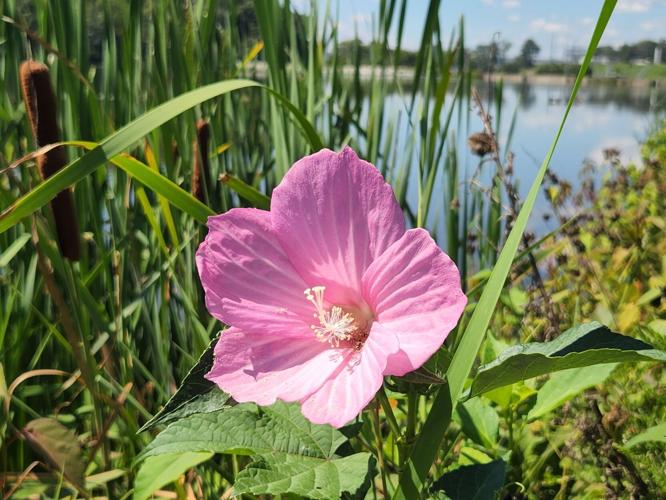
The work being done to restore this land is a huge undertaking and has taken years of work by partners and volunteers. Native fruit trees have been planted and managed. Pollinator fields have been planted to feed and protect insects and butterflies.
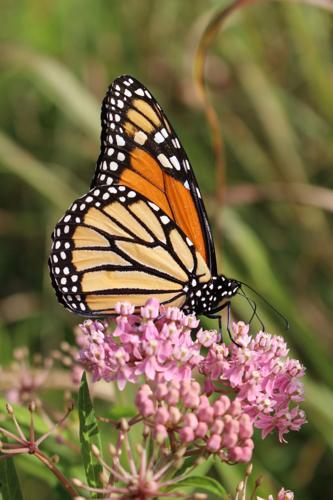
Speaking of butterflies, in the spring of 2016, volunteers planted 64 common milkweed and 64 swamp milkweed plants, gifted from Kansas’ Monarch Watch Program. Today, there are thousands of milkweeds, butterflies, and caterpillars for visitors to see.
Managing invasive plants is ongoing. Vines can take over and strangle a tree or cover a field quickly if not monitored. Bittersweet is an example. A vine planted for the pretty berries but deadly to trees and other shrubs if not controlled.
I mentioned the park is used for schools and educational projects. Teacher workshops that happen there include project WET Water Education Today, Project WILD, and Project Learning Tree.
I saw cat tails that reached above my head and the wind-down of blooming pollinators. I missed the mating pair of bobcats and the two bob cat kittens that have made the Habitat home, but of course, I saw deer.
Giddy from seeing this secret garden and overwhelmed with Karen’s knowledge, I couldn’t stop talking about this space for days. This is an example of corporate neighbors doing what is right for the land and community.
Thank you, Karen Kish. You are the real deal. Passionate and educated, with Horticulture and Entomology degrees, now working as an Environmental Scientist and Entomologist for Jacob Engineering. Karen is a long-time member of the West Virginia Entomological Society and a native plant enthusiast. Bethany Kinder, West Virginia Geographic Communications Manager at Dow, you made the tour happen and shared with me the wonders of Ward Hollow Wildlife Habitat. Thank you.
Currently, the garden is secured and available only through planned visits. To make arrangements for educational groups and events reach out toKaren.kish@jacobs.com or 304.373.7569 for appointments.