
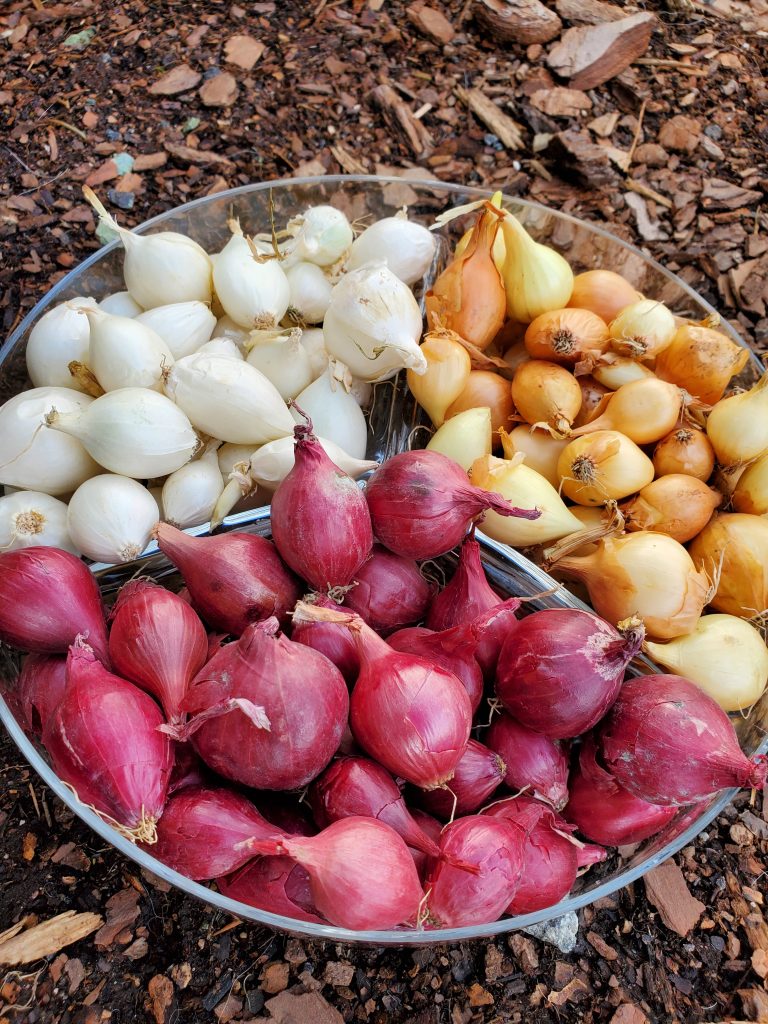
If I’m thinking about taxes, it must be time to plant onions.
One makes me wring my hands and fear the IRS will come knocking on my door; the other makes me happy that it’s time to put my hands in the outside soil.
The vegetable gardens at the little house on a big hill are small. Mostly, this is because of limited areas of full sun and the deer that visit several times a day. But I love having fresh green onions.
Growing green onions is easy. I promise – anyone can do it. I start with onion sets, which someone else started from seed the previous year. You can get onion sets at garden centers in the early spring, just about anywhere you buy seeds and plants.
Onions don’t like summer temperatures, so now is the time to plant (and do your taxes). Before planting, mix a 10-10-10 fertilizer into the soil. As a quick reminder, that means equal parts nitrogen, phosphorus, and potassium or NPK. Onions are heavy feeders, so this prep work will add to your successful harvest.
I plant my onions in raised beds, but they don’t need much space, making them a great container crop. They may not need room to spread, but they like at least 6 hours of sun each day.
After mixing in a balanced fertilizer, I plant in rows. Creating a planting trench about 1 ½ inches deep, then I drop the onion sets into the soil a few inches apart. When you look at an onion set or onion bulb, you will notice it has a pointed end and one that is a bit rougher. Make sure the pointed end is facing the sky. That flatter, rougher end will reach the ground and pull nutrients to the plant.
Newly planted onions like consistent watering because of their shallow root systems. Expect our green onions to be table-ready in 50-60 days. When the green tops are tall and begin to fall over, reduce watering and begin to harvest the onions.I suggest planting a row each week so as they mature you will have a continuous harvest.
No worries if you plant now and the temperatures drop. Onions can handle a mild freeze. If the temps drop to 20 or below, consider covering them for the night.
I really don’t worry about onions freezing, but I do get concerned about planting them too late in the season when the heat may cause them to bolt.
Bolting means the plant is prematurely flowering. When this happens, the plant will spend its energy on flowering and reproducing, not the roots or bulb. If you see flowers on our onion tops, begin to harvest and enjoy your crop.
Other early vegetables that could be planted outdoors now include peas, radishes, spinach, and leeks. Give your peas something to climb on as the vines grow. Count on radishes to mature quickly, often in 3 to 5 weeks. This is a fun crop for kids because they see results before losing interest in the seeds. Fresh radishes dipped in high-quality butter and dapped in salt are one of my favorite spring treats.
And don’t forget; we get an extra hour of gardening time beginning Sunday, March 10. As we “spring forward” the clocks to start Daylight Savings Time, the first few evenings are rough, but seeing the sunshine sure makes me happy and gives me an extra hour to finish my taxes.