
Of course, it’s hot—it’s summertime. But these days with temperatures of 90-plusdegrees are taking their toll on me and my garden.
Yes, I water—the front gardens one night, the back gardens the next. Last year, I purchased drip hoses to install but never did—you can bet I did this year. When the forecast said minimal rain for the next 10 days, I got busy, and they sure are handy when I have a list of evening chores to finish and don’t have time to devote to my ritual of daydreaming while watering each evening.
Another way to beat the heat and lack of rain is to plant your garden with heat and drought-resistant plantings.
With planning and a little research, there are both annuals and perennials that can beat the heat and thrive in the hot summer sun.
Rudbeckia or Black-Eyed Susans are a garden favorite. Their early spring blooms will brighten any garden. The golden petals around dark centers are fun to cut and add to vases and bouquets. Cutting the blooms encourages the plant to produce more flowers, so cut away and enjoy these sunny flowers indoors.
My butterfly bush is blooming. This bush is a mature plant and has the will to survive. I did not trim it back in the late winter/early spring, but it looks great. Just this week, I cleared away a few sneaky vines that were creeping up the trunk and threw down fresh mulch – and today, it’s blooming.
The mulch helps the soil retain water and acts as a weed barrier. I love a freshly mulched garden bed for both reasons.
In this same sunny bed, I have coreopsis, a plant that is related to the sunflower. The plant is compact and has yellow flowers that bloom in early summer. Again, this is an established plant that returns every year regardless of the abuse from me, the deer, or the pup.
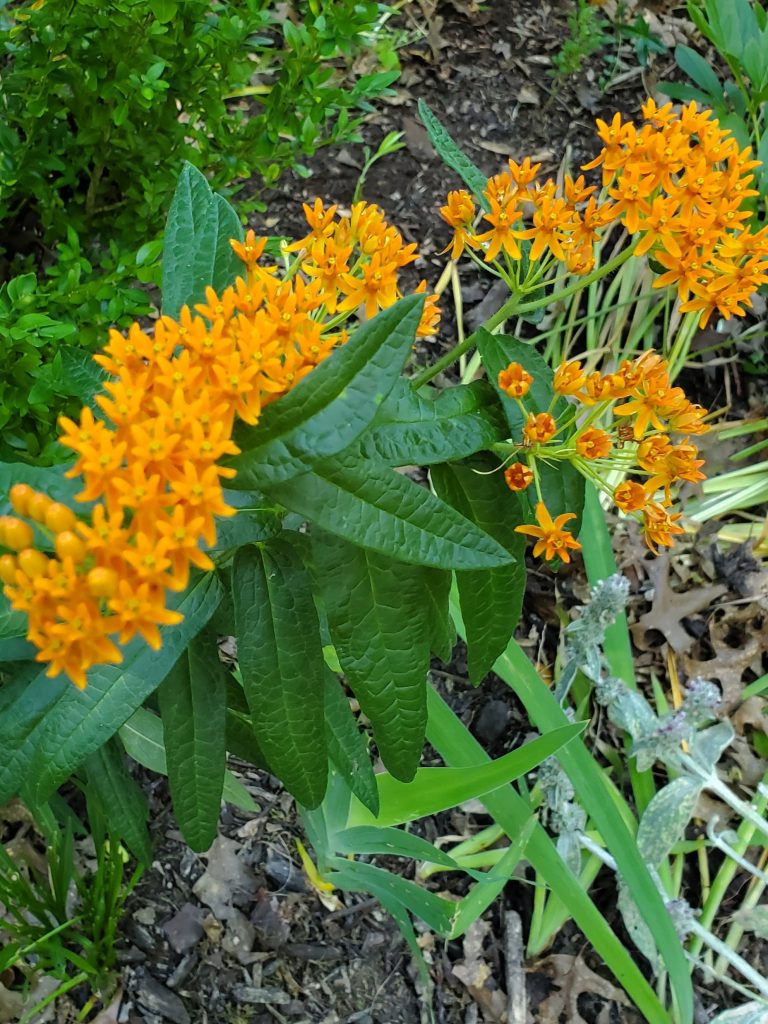
Another perennial that has proven itself in my garden is butterfly weed. The bright orange flower is a beacon for pollinators, and it’s pretty. It has passed the test of survival of the fittest in my sunny bed, so much so that I will try to add more of this low-maintenance flower to the mix. The color is so bright I catch glimpses of it from windows as I move through the house.
Two plants that can take the heat but I have never grown are yucca and globe amaranth.
This summer, I am seeing yucca everywhere. That is yucca, the perennial flowering plant, not yuca, the root vegetable. I think it has always been there, but this is the summer I am noticing it, especially when in bloom. Yucca stores water in its trunk to handle the summer stretches of little water. If adding it to your garden, keep in mind that yucca has sharp spear-like leaves, so planting it away from pathways is a good idea.
Globe amaranth is the sweetest add-in to bouquets. The small, colorful annual flower is clover-like and just a ball of fun. Once established, the colorful balls and plants will continue to grow in the heat of July and August. Cutting the flowers will encourage more blooms.
Annuals like lantanas, zinnias, and angelonias will add color to containers and garden beds. After the initial planning and when they have begun to spread their roots, these annuals will work hard in your garden and not be high maintenance. If planted in containers, these and all plants will need more consistent watering.
These perennials and annuals may be labeled drought- and heat-tolerant, but that doesn’t mean they don’t need water. Almost all plants need water when becoming established in the garden. As they mature and develop a root system, they become stronger and able to take nutrients from the soil to survive.
To encourage all plants, even those I know can take abuse, to thrive in my garden, I apply mulch and (try) to keep a regular watering schedule. Picking the right plants, giving them the right environment, plus a little luck and fairy dust will help any gardener create a beautiful garden through the hot and dry summer months.