
It is the week of Halloween, and there is talk of witches everywhere – even in the garden.
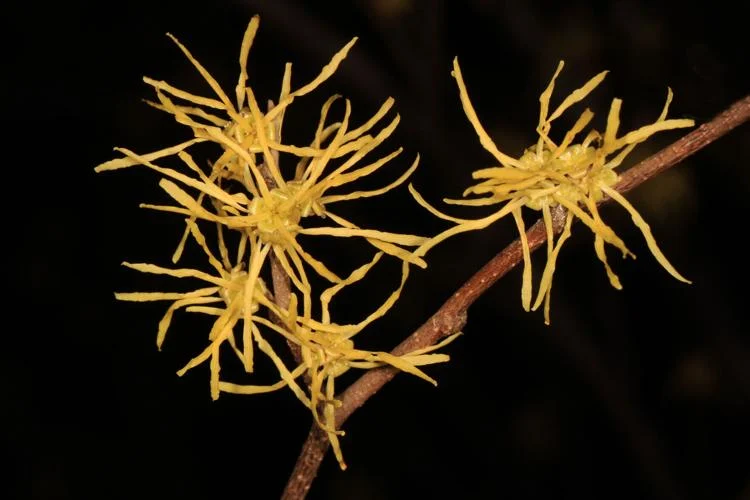
Witch hazel is coming into its season. The yellow and orangish-red flower clusters open up as the leaves drop, and the colors are perfect.
There are several varieties of Witch Hazel of the Hamamelis genus, meaning “together with fruit.” This is a hint to the slow growth of the plant. The flowers that are so lovely in the fall and winter are on the stems with the maturing fruit from the previous year.
American witch hazel grows as an understory in nature, meaning it gets dappled sunlight through the trees above. Choose a spot with sun and well-draining soil when adding any of the varieties to your garden. Give this plant space. When mature, it can reach over 12 feet tall and several feet wide.
Although this plant can be grown from seed, it doesn’t happen with the twitch of the nose (sly Halloween reference). It can take over two years for the seeds to germinate.
Witch hazel doesn’t flower until the plant is about six years old. But like magic, the flowers last up to eight weeks through the fall and winter.
If bought at a nursery, plant now – late fall or early spring. Like all bush planting, dig a $50 hole for a $5 plant, meaning dig a great hole. Make it wide and deep enough that the new plant sits even with the ground. Mix in compost and backfill the hole, water, and mulch.
If the plant is already growing in the garden, consider an annual fertilizer, either granular, spikes, or organic, in the late fall after the leaves drop. In the spring, not much pruning is necessary, only removing dead branches or suckers that grow up around the base of the plant.
Witch Hazel can be planted in a container and will be happy there for several years. Choose a large container, at least 16 inches, with good drainage, and maybe planter feet to prevent drainage holes from becoming blocked. This slow grower may eventually become top heavy and need a larger container or to be placed in the ground.
Expect deer and rabbits to nibble on the branches. No magic spell prevents this, just diligent spraying, netting, and garden maintenance.
The most common varieties are Japanese witch hazel, Chinese witch hazel, which is the most fragrant, and a North American variety with yellow flowers. A new cross between Japanese and Chinese varieties blooms mid – to late winter and comes in several colors.
Witch hazel has a history of medicinal and herbal uses – no documented cauldron brewing potions, mainly as a cure for minor skin irritations.
As much fun as it is to think of witch hazel as a plant named after those who practice magic, the name comes from the English word”wince” and the Old English word “wice,” meaning pliant or bendable. Early settlers and Native Americans used the plant to find water. The stems were considered helpful for dowsing, also called “water witching.”
Whether or not the plant has magical powers is in the eye of the beholder, but the flowers are quite bewitching in the garden during the late fall.