
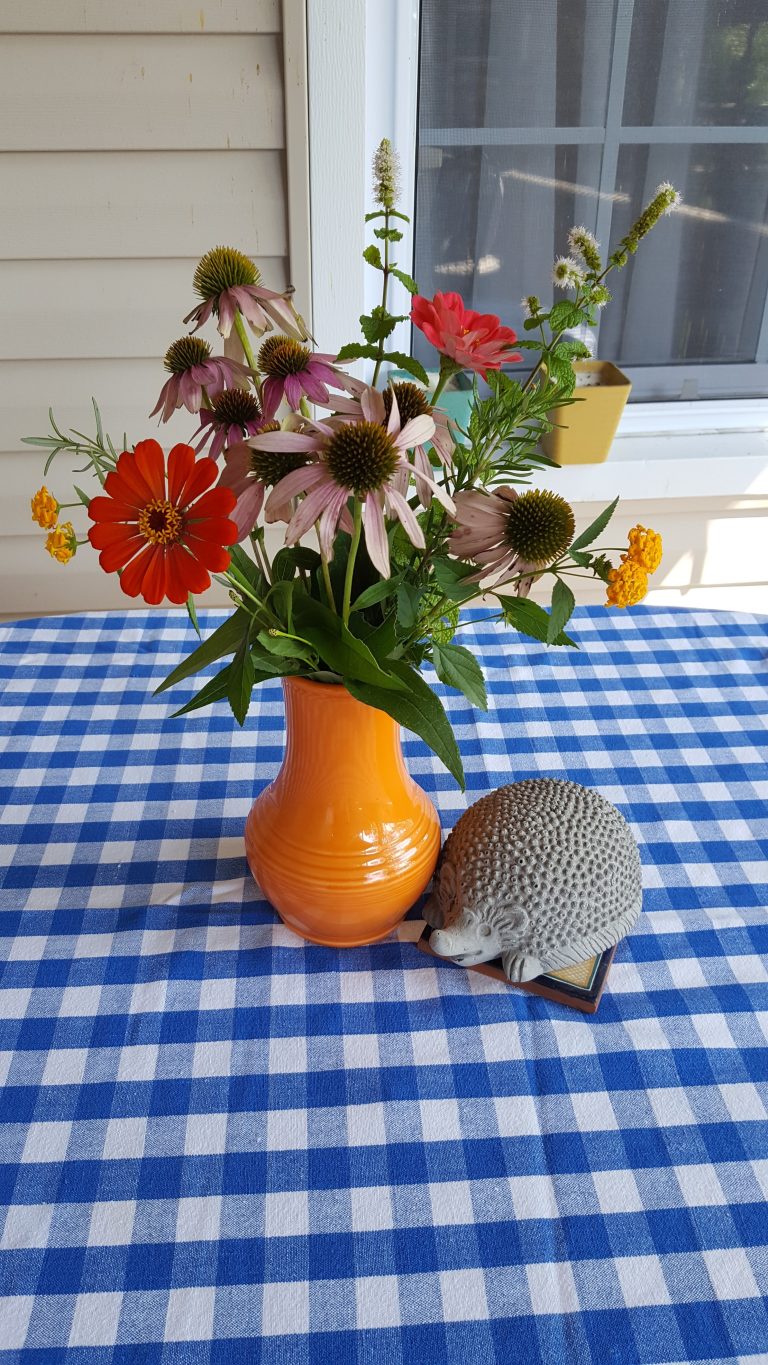
Off with their heads – but don’t forget the stems.
That’s what cutting gardens are made for – cutting the flowers and enjoying the bouquets and vases they fill. I know, I know, you work hard to grow a lovely garden, then take the flowers away. Yep, that is precisely what you should do.
To create a cutting garden, first, identify the space. To get full blooms and healthy plants, pick a spot that gets full sun, at least six hours each day.
Prepare the soil by adding organic matter, such as compost. This will add nutrients and improve water retention and soil drainage. Do this every year to enhance your soil and chances of a healthy garden.
Next, I recommend planting in rows and creating easy access to the plants. Rows will make harvesting your blooms much easier.
When it’s time to place seeds and plugs in the ground, consider each plant’s needs, such as watering schedule and fertilizing needs, and then group accordingly. Taller plants work best in the back and shorter in the front. This keeps the little ones from being hidden and also gives them more sunlight.
Mix it up when placing the plants. If you place all the early bloomers together, you will have empty spaces in the garden beds. By combining the flower cycles, you will always have something blooming. Think phlox in the spring, snapdragons in the summer, and asters in the fall.
Cutting gardens tend to be filled with annuals. Ideally, these should have strong blooms and long stems and hold their shape as they dry in the arrangement. Consider dahlias, zinnias, cosmos, roses, and marigolds. Don’t forget unique flowers such as Chinese lanterns and gladiolus.
Scabiosa (pincushions), Black-eyed Susan’s, coreopsis, salvia, cone flowers, and yarrow also make great choices. So do herbs. They add aroma and beautiful foliage to the bouquets.
When the plants mature and blooms appear, harvest often. This is why you created the garden. Create arrangements for inside and bouquets for friends. Often, the more you cut and trim, the more the plant will flower. If you notice bare spots, sow a few more seeds to fill in the voids. A mid-season shot of liquid fertilizer may help, too.
Harvesting in the hot afternoon sun is stressful for plants and blooms. Try for early mornings and evenings. Then quickly put the stems in water, even adding a bit of bloom preservative to the water. Let the stems absorb this mixture for an hour or so before arranging them in the final containers.
Here’s an insider tip: Trim lower leaves and small stems from the central stalk. If these are underwater, they will cause bacteria and shorten the length of your blooms.
No space for a separate cutting garden? No problem. Just add the annuals into your existing beds with the intention of cutting the flowers when appropriate. Afterall, why leave all the hard work outside, when it can fill a beautiful vase and be the star of your table or desk. Heck, I like a few stems on my bathroom counter to begin my day with flowers.
_______________________________________________________________
Master Gardener Plant Sale
The WVU Extension Service Master Gardeners of Kanawha County invites you to visit their annual Plant Sale on Saturday, May 11, 2024. The Plant Sale will be held from 9:00 a.m. to 1:00 p.m. at the Riverside Pavilion at Coonskin Park and is free and open to the public.
Kanawha County Master Gardeners will offer for sale perennials, annuals, houseplants, and vegetable plants, many of which are grown in Master Gardeners’ own gardens. The Plant Sale will also include garden tools, pots and other garden-related treasures. Fairy gardens and wreaths, handmade by Master Gardeners will be included in a raffle drawing. Proceeds from the Sale are used to support community gardening projects and Master Gardener Program activities
For more information, visit the Kanawha County Extension Master Gardener Association’s Facebook page at: https://www.facebook.com/kanawhaMG/ .