
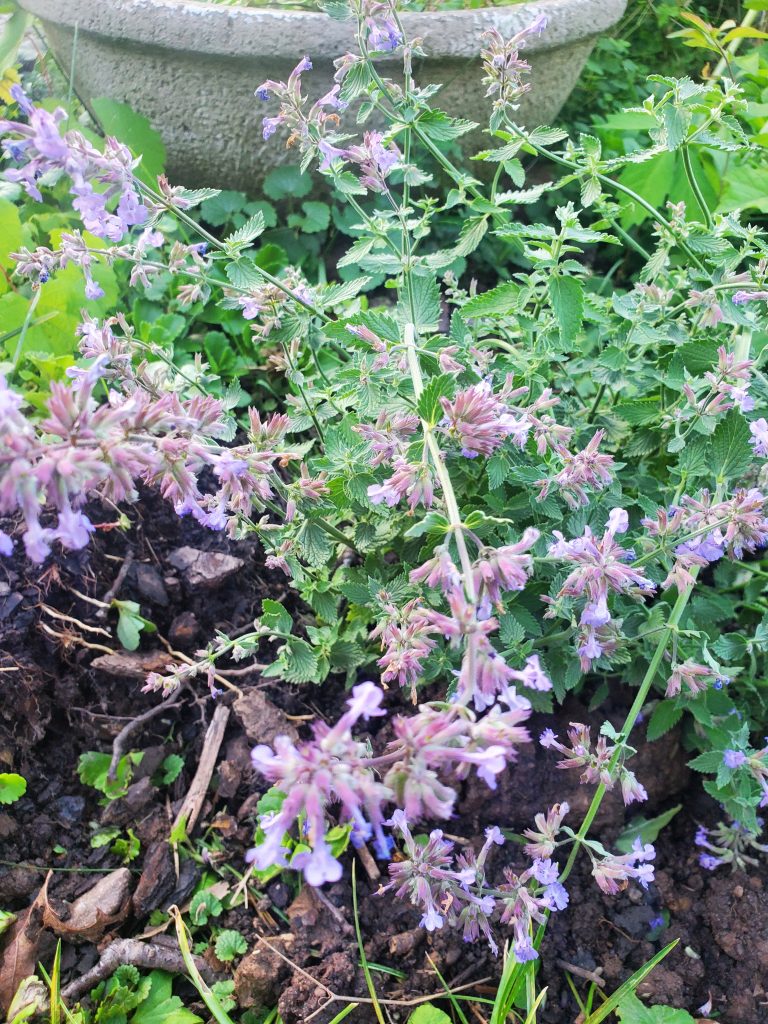
I had a plan – and it was a good plan. I knew just the plant I wanted to incorporate into my front door garden. I found it and quickly added it to the mix.
Here is where the story gets interesting and the plan goes downhill: I didn’t think it through. I consistently tell gardeners to think about how the plant will mature and play with others in the garden. I did not take my own advice.
My front garden – the one I see as I look out the front door – is a mix of shades including lavender, silver, and shades of green. Early blooms of hellebores and Solomon seal, sedums, alliums, and big leaf lamb’s ear fill the bed. It’s soft and easy on the eye, plus it’s pretty low maintenance.
The pup loves to lay in the doorway, rest her head on the storm door adjustable hinge thing (I have no idea the official name, but they make a great pup headrest), and watch the world walk by. An occasional squirrel or deer will capture her attention enough that she will lift her head for a minute or two, but then return to her relaxed state.
On a quiet afternoon when all was going as usual inside the little house on a big house, imagine my surprise when she began barking non-stop and creating a commotion that I’m sure my neighbors haven’t heard since her younger days.
This is where I realized the flaw in my plan. This sweet pup, usually calm and collected, will let the world go – unless it’s a cat. At the slightest hint of a feline coming into her view, she goes into a frenzy, barking and jumping.
And what did I do? I planted catmint directly across from the front door, a straight line from her Zen spot. Without thinking it through, I had invited the neighborhood cats to stop by for a treat and relentlessly taunt my sweet pup.
Catmint is not the same as catnip, but both are members of the mint family and related to lavender, rosemary, and thyme. Both will attract cats. Catnip is more aromatic than catmint but is less ornamental in the garden.
Catmint is an herbaceous perennial. The stems and leaves die back in the winter, but the roots stay alive and will produce new stems in the spring. I suggest not cutting back the stems and letting them add silver color to your winter garden while they protect the crown of the plant from winter weather.
By April, green mounds will form, and by May, the plant will be filled with wonderful lavender flowers. Pollinators such as bees, butterflies, and hummingbirds will be sure to visit this plant.
Plant catmint in a sunny location to thrive, but it will grow in a spot that gets afternoon shade. The plant likes well-draining soil. Regularly water new plants or those recently transplanted until they are established. Once matured, the plant becomes drought-and heat-tolerant.
Catmint is often used as an underplanting or companion plant for roses. The greenery covers the bare roots of rose bushes and adds a complementary color to most rose flowers.
Give this plant room to grow wide. Catmint will spread wider than taller after the first blooms, so don’t be afraid to prune back one-third of the plant. This shearing will help keep the plant compact and encourage a second bloom of flowers. If you forget to shear, no problem; the plant will continue to bloom.
Catmint is a beautiful perennial to add to your garden. But I encourage you to do as I say, not as I do, and consider plant placement carefully. As happy as I am with the color of blooms and leaves in my front garden, I will move it to another area, away from the pup’s resting spot; after all, gardens are meant to be tranquil and peaceful for all, including my sweet pup.